Mausoleum of Chashma Ayub🕌
Today next trip is to Chashma Ayub❤🕌.
Go🛸🕍
Mausoleum of Chashma-Ayub is the religious building in the heart of Bukhara. It consists of the mausoleum and a holy spring. Today it includes a Museum of Water. The mausoleum was built by the order of Karakhanid rulers in the 12th century. It was rebuilt several times during the 14th-19th centuries. During the Tamerlane’s reign the mausoleum was completed. The building features four rooms, situated on the East-West axis. Each room is topped with a dome. The western room was the first building and was built as a sepulchral tower; the rest rooms were built later.
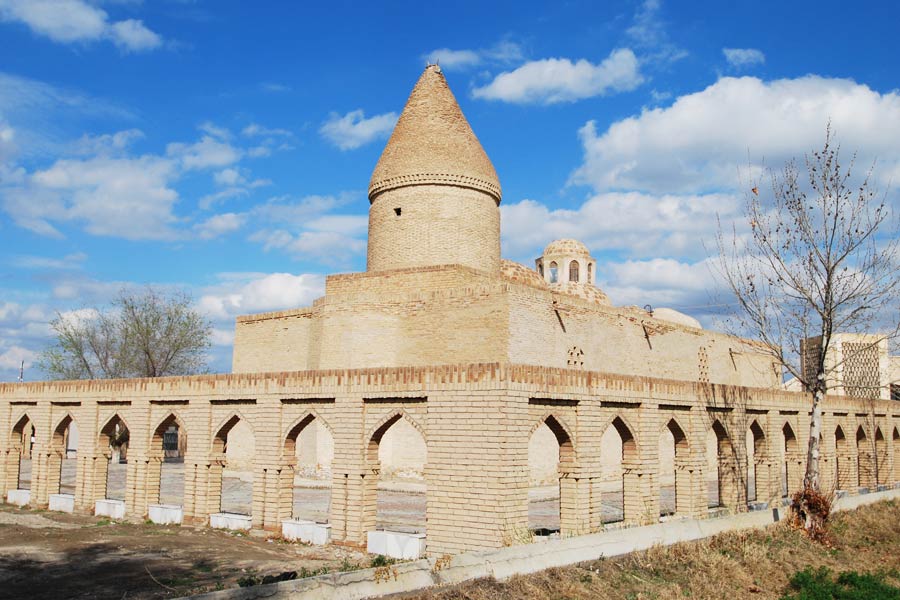
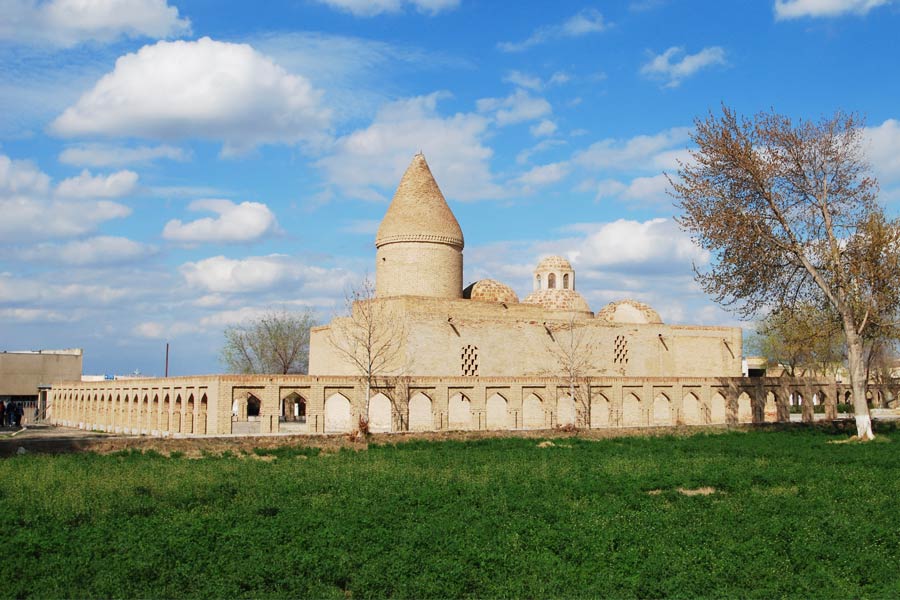
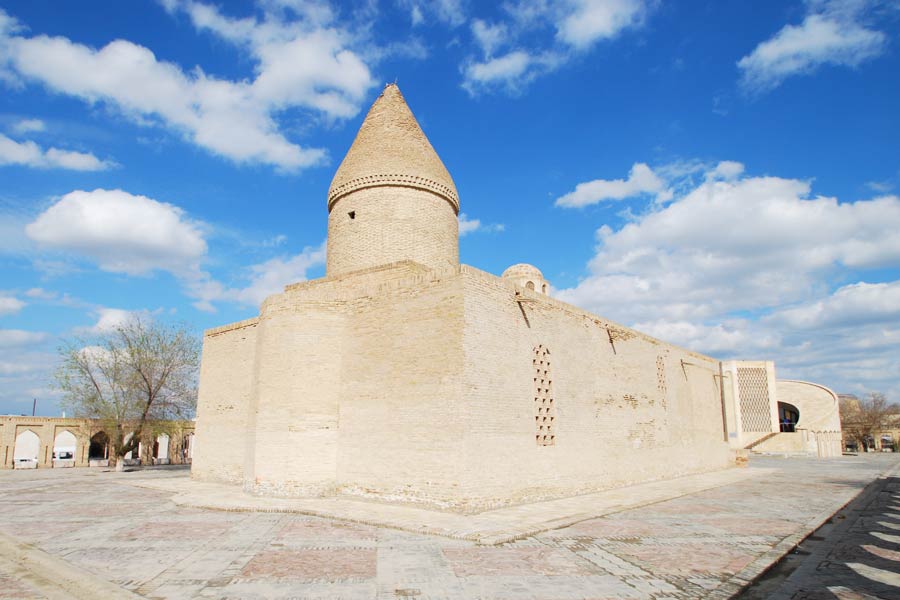
This mausoleum is related with a legend of the Prophet Job. Once Bukhara suffered from desert winds and residents suffered from a drought. People prayed Allah for a miracle. And the God heeded their requests. At that time the Prophet Job had a trip through Bukhara lands. He struck the ground with his staff and healing water sprang up. The spring saved Bukhara people and they called it Chashma-Ayub, the spring of Holy Ayub.


The mausoleum is considered one of the iconic examples of early Islamic architecture[3] and is known as the oldest funerary building of Central Asian architecture.The Samanids established their de facto independence from the Abbasid Caliphate in Baghdad and ruled over parts of modern Afghanistan, Iran, Uzbekistan, Tajikistan, and Kazakhstan. It is the only surviving monument from the Samanid era, but American art historian Arthur Upham Pope called it the "one of the finest in Persia".
Perfectly symmetrical, compact in its size, yet monumental in its structure, the mausoleum not only combined multi-cultural building and decorative traditions, such as Sogdian, Sassanian, Persian and even classical and Byzantine architecture, but incorporated features customary for Islamic architecture – a circular dome and mini domes, pointed arches, elaborate portals, columns and intricate geometric designs in the brickwork. At each corner, the mausoleum's builders employed squinches, an architectural solution to the problem of supporting the circular-plan dome on a square. The building was buried in silt some centuries after its construction and was revealed during the 20th century by archaeological excavation conducted under the USSR.
During the 10th century, Samanids' capital, Bukhara, was a major political, trade and cultural center that patronized science, architecture, medicine, arts and literature.[1] Cultural and economic prosperity was fueled by Samanids' strategic positioning along the trade routes between Asia, Middle East, Russia and Europe. It is believed that the Mausoleum was built to emphasize the dynastic power of the Samani family and to link its history with their newly established capital.
There are various estimates by the researchers of when the Mausoleum was built. Some attribute it to the reign of Ismail Samani (r. 892–907 CE),[6][5] a founder of the dynasty (b. 849),[7] some reference Ismail's father, Ahmad,[3] who governed Samarkand. Others attribute the building to the reign of Ismail's grandson, Nasr II who ruled (r. 914–943 CE).] The reason for this later attribution is the lintel with inscribed Kufic script with his name found on the eastern side of the building during the restoration works in 1930s.
In 1930s, Soviet researchers discovered a copy of a 10th-century waqf document (copied around 1568)that specified that Ismail Samani donated Bukhara's cemetery Naukanda and for what appears to read as a funerary building for his father, Ahmad, confirming earlier assumptions of a dynastic nature of the monument. Before the time of Genghis Khan's siege and sack of Bukhara in 1220, the mausoleum is believed to have been buried in mud and sand fromflooding and landslides, remaining so for centuries.Thus, when the Mongol armies reached Bukhara, the tomb was spared from their destruction, unlike most other buildings of that era. For the same reasons, the building was not known to the world until the early 20th century when archaeologists rediscovered it.
Bye🛸😊


Very informative blog 😍❤️
ReplyDeleteWow perfect
ReplyDeleteGood job Mehrangiz💞😇💖
ReplyDelete